
What To Do If Your Roof Is Damaged in a Storm
A calm, safety-first guide to protecting people, recording visible damage, speaking to your insurer and arranging a roofing assessment.
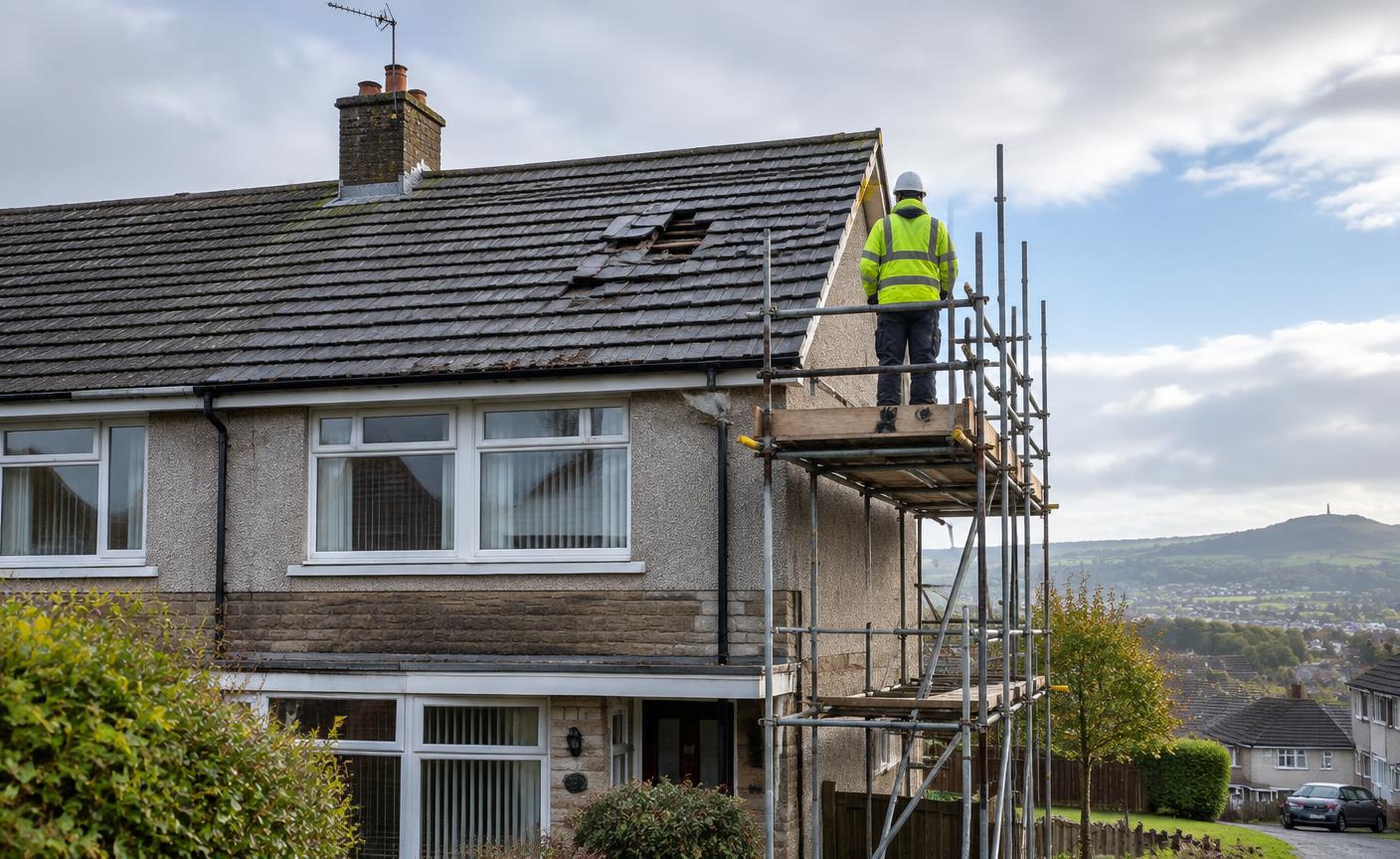
Strong wind and driving rain can dislodge slates or tiles, open ridge details and expose weaknesses around chimneys, valleys and roof edges. The damage may be obvious, with material on the ground, or it may first appear as water entering a room. Either way, the safest response is calm and methodical. Protect people first, limit indoor damage where this can be done safely and arrange a professional assessment.
Never climb onto a roof yourself, during the storm or afterwards. Wet coverings are slippery, damaged materials may move without warning and the structure beneath may be weaker than it appears. Ladders are also hazardous in gusty conditions. Useful information can be gathered from the ground or inside the home without putting anyone at risk.
Put safety before the building
Keep family members, neighbours and pets away from the area below visible damage. A loose slate, tile, ridge piece or section of gutter can fall after the worst weather seems to have passed. If debris has landed on a public path or presents an immediate danger, avoid handling unstable material and follow the advice of the appropriate emergency service or local authority.
Inside, do not enter a loft if water is close to electrical equipment, the ceiling is bulging or the structure appears unsafe. Do not touch wet fittings. If there is an electrical concern, isolate the supply only when you can do so safely and seek qualified help. The roof can be repaired later; nobody should take a risk to save furnishings or inspect a leak.
Limit water damage from a safe position
If water is dripping into an accessible room and there is no electrical or ceiling hazard, place a container beneath it and move furniture or belongings away. Towels or protective sheets can help with small amounts of water. Avoid puncturing a ceiling or opening part of the building unless a competent professional advises you to do so.
A temporary covering should only be installed by someone with the correct access and safety equipment. Throwing a sheet over a roof from a ladder can create another hazard and may not remain secure in wind. A roofer will assess whether conditions allow temporary weatherproofing, removal of loose material or a focused repair.
Make notes and take photographs from the ground
Record when you first noticed the problem, which rooms are affected and whether the leak changes with wind direction or rainfall. From a safe ground-level position, photograph fallen materials, visibly missing coverings, displaced gutters and external staining. Indoor photographs of damp patches and damaged belongings may also be useful. Never lean from a window or climb for a clearer view.
These notes can help the roofer understand the likely entry point and may support a conversation with your insurer. Keep any fallen slate or tile only if it can be collected without entering a danger area. The fragment may help identify the covering, but personal safety remains more important than preserving evidence.
Contact your home insurer
Tell your insurer what happened and follow the process set out in your policy. They may ask for photographs, a description of the event and details of immediate steps taken to prevent further damage. Keep copies of messages and notes from telephone conversations. Ask what information they require before permanent work begins, especially where the damage is extensive.
Insurance arrangements vary, so a roofer should not promise that particular work will be covered. The roofer’s role is to assess the physical condition, make the roof safe where possible and provide photographs and a written scope. Your insurer decides how the policy applies. Clear records help each party understand what was observed and proposed.
Call a roofer and describe what you can see
Explain whether material has fallen, water is entering, a section looks lifted or a gutter is hanging loose. Mention any solar panels, rooflights or access constraints. Photographs taken safely from the ground can be shared, but they do not replace an inspection. Damage on another slope or around a chimney may not be visible from where you stand.
Roofing Central Scotland assesses emergency roof repairs across West Lothian and nearby Central Scotland. We do not encourage anyone onto the roof and we do not promise a fixed response time. Access, weather and the immediate risk must be considered before work at height begins. Calling early allows the team to understand the situation and discuss a safe next step.
Understand temporary and permanent repairs
In unsettled weather, the first safe action may be temporary. This can include securing loose material, creating a weatherproof covering or completing a limited repair that prevents further entry until the full damage can be assessed. A temporary measure is not automatically the final solution and should not be represented as one.
Once conditions and access allow, the roofer can inspect slates or tiles, ridge and hip details, valleys, flashings, chimney masonry and roofline components. Photographs show the affected areas. A separate written quote can then describe the permanent repair and explain whether the surrounding roof remains sound.
Look beyond the missing slate or tile
Storms often expose an existing weakness rather than creating every part of the problem. A tile may move because a fixing has failed, while neighbouring coverings remain secure. In another case, several slopes may show tired fixings, damaged underlay or previous patching. The visible gap is important, but the condition around it determines whether a local repair will last.
Wind can also disturb ridge components, lead flashings, fascias and gutter brackets. Driving rain may enter a junction that performs adequately in ordinary weather. A cause-led inspection considers these connected details instead of replacing one obvious piece and assuming the whole issue is resolved.
Check the completed repair and keep records
After permanent work, retain the quote, photographs and description of what was completed. The roofer should inspect the repaired area, remove waste created by the work and explain any remaining maintenance recommendations. If internal finishes are damp, allow the cause to be resolved and the area to dry before cosmetic redecoration is treated as complete.
Homeowners looking for storm roof repairs in Whitburn or roof repairs in West Calder can contact our Bathgate team directly. We provide photo-backed advice and distinguish immediate safety work from the lasting solution. The most important steps remain simple: stay off the roof, document only what is safely visible, speak to your insurer and use a properly equipped roofer.