
7 Signs Your Roof Needs Replacing, Not Repairing
Learn how widespread wear, recurring leaks and failing roof materials can indicate that replacement is more sensible than another repair.
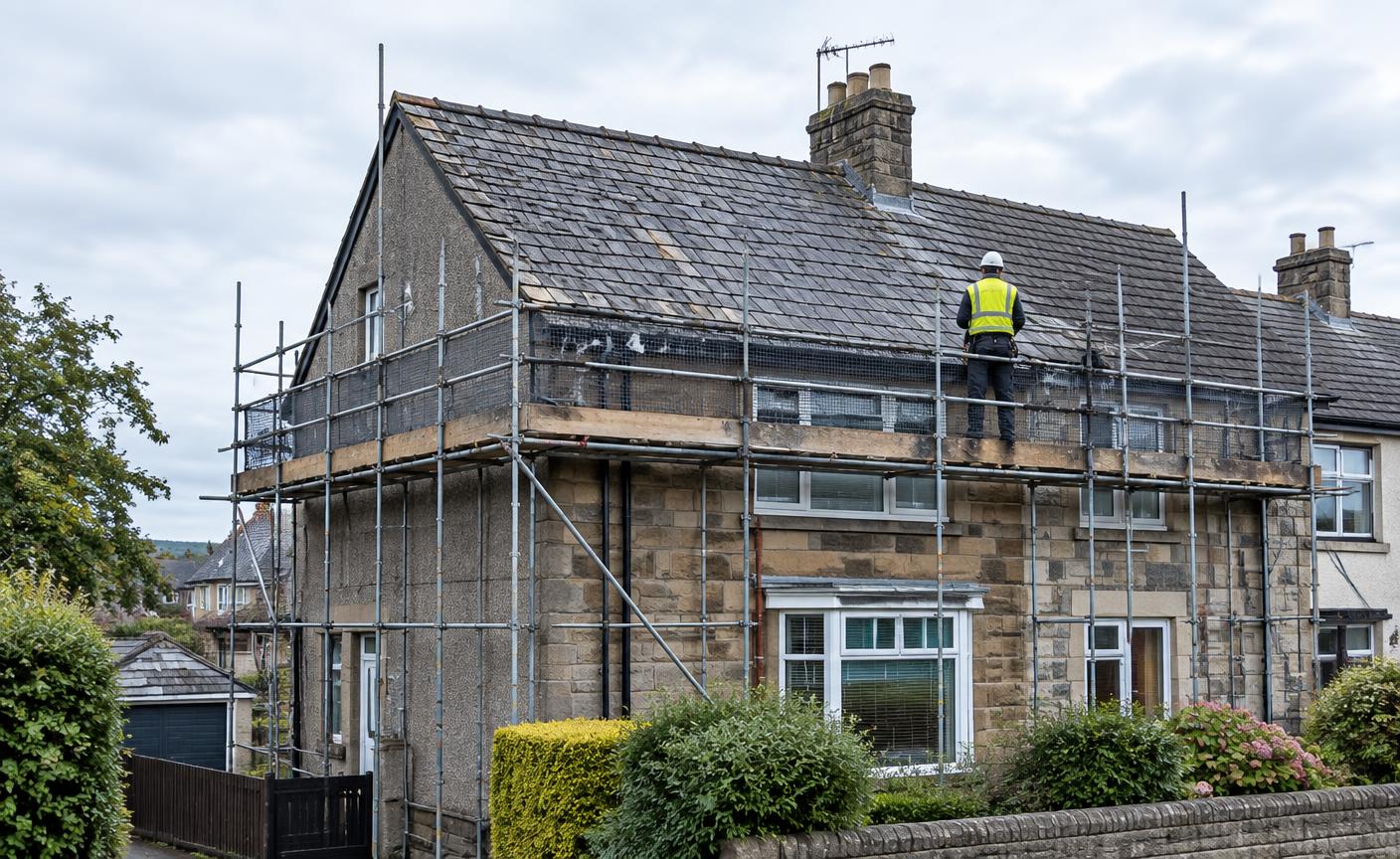
A well-built roof can protect a home through many seasons of Scottish wind and rain, but no covering lasts indefinitely. A slipped slate or isolated leak does not automatically mean that the whole roof needs replacing. Many faults can be repaired successfully when the surrounding materials, fixings and structure remain sound. The important question is whether the defect is local or part of wider deterioration across the roof.
Repeatedly repairing a covering that is failing in several places can become disruptive and may never address the underlying condition. A proper survey should look beyond the most obvious damp mark. It should consider the slates or tiles, ridge, valleys, flashings, membrane, battens, sarking, ventilation and accessible timbers. The following signs help explain when a complete replacement may offer a more reliable solution than another isolated patch.
1. Repairs are becoming increasingly frequent
One repair does not condemn a roof. Storms can dislodge an otherwise sound slate, and a single cracked tile can be replaced. Concern grows when new problems keep appearing on different slopes or around several details. A leak near a chimney may be followed by movement at the ridge, then by slipped coverings elsewhere. This pattern can indicate that the fixings, underlay or covering are declining together rather than one component failing alone.
Keep a simple record of where repairs have been completed and what prompted them. If call-outs are becoming a routine part of maintaining the home, ask for an assessment of the complete roof rather than another narrowly defined patch. Photographs from a professional survey can show whether previous repairs remain localised or whether deterioration is now widespread.
2. Slates or tiles are failing across several areas
Natural slate can remain serviceable for a long time, but the nails or fixings holding it may weaken. When slates begin slipping across more than one roof face, replacing individual pieces may not stop the pattern. Tiles can also become brittle, cracked or badly weathered. Widespread surface damage, open laps and repeated movement after wind suggest that the covering is no longer acting as one dependable weatherproof layer.
A roofer should assess the condition and availability of matching materials as well as the surrounding fixings. On an older slate roof, isolated sound slates may sometimes be salvaged, while a replacement specification deals with the failing background materials. On a tiled roof, the condition of ridges, verges and underlay should be considered alongside the main field of tiles.
3. The sarking, battens or membrane are deteriorating
The visible covering is only part of a pitched roof. Scottish slate roofs often sit over timber sarking, while tiled roofs commonly use battens and an underlay or membrane. Water that passes a broken covering may expose weaknesses beneath. Rotten sarking, decayed battens, torn underlay or widespread staining can make local repairs less dependable because the new slate or tile still relies on a tired supporting system.
Some of this condition can be assessed from the loft or at accessible edges, but the full picture may not be visible until work begins. A careful replacement quote explains how concealed deterioration will be handled and which elements are included in the proposed build-up. It should not assume that every timber needs changing, but it should allow the exposed structure to be checked properly.
4. Leaks return around ridges, valleys and junctions
Ridges, valleys, chimneys and abutments manage some of the most demanding water paths on a roof. A sound local repair can restore a failed detail, but recurring moisture around several junctions may indicate broader movement or ageing materials. Surface sealants are rarely a substitute for correctly formed leadwork, secure coverings and a suitable underlay beneath the junction.
Water can travel along timbers before showing indoors, so the position of a ceiling mark does not always reveal the entry point. Surveying the whole route is essential. When several major details need rebuilding and the surrounding covering is also tired, replacing the roof can allow all junctions to be renewed as one coordinated weatherproof system.
5. The roofline or roof shape shows visible movement
A roof that appears uneven does not always have a structural fault, particularly on an older building where timbers have settled gradually. However, a new sag, spreading dip or change around the ridge deserves professional attention. Movement may relate to damaged timber, prolonged moisture, overloaded areas or an earlier alteration. It should be investigated before anyone proposes simply laying a new covering over it.
The survey may recommend further structural advice where appropriate. If the underlying structure can be repaired, a replacement roof provides the opportunity to create an even, stable base and reinstate the covering correctly. The aim is to understand the cause rather than disguise the visible symptom.
6. Ventilation and condensation problems affect the roof space
Not every damp roof space is caused by rain. Warm, moisture-laden air from the home can condense on cold surfaces when ventilation is inadequate. Persistent condensation may stain timber, dampen insulation and encourage mould. A small external repair will not solve a moisture problem created by the roof build-up and the movement of air through the property.
A replacement specification can incorporate appropriate eaves or high-level ventilation and a suitable breathable membrane, taking account of the existing construction. This work must be planned rather than added as an afterthought. The roofer should distinguish between an external leak and internal condensation, because each requires a different response.
7. The covering has reached the end of its useful condition
Age alone does not decide whether a roof needs replacing. Two roofs installed around the same period can perform differently because of material quality, exposure, maintenance and workmanship. Condition is the stronger guide. If coverings are brittle, fixings are broadly failing and repairs no longer hold, the roof may have reached the point where replacement is the proportionate option.
This decision should be supported by evidence, not pressure. Ask to see photographs and to understand which slopes and details are affected. A written quote should explain the new covering, membrane, battens or sarking work, ventilation, flashings, ridge and waste removal. It should also identify any assumptions about concealed materials.
Repair or replace – make the decision from evidence
A focused repair remains the right choice when damage is genuinely local and the surrounding roof is sound. Replacement becomes more compelling when faults are repeated, widespread or rooted in the layers beneath the visible covering. It can also be sensible when extensive chimney, valley and roofline work would otherwise be carried out against materials that are close to failing elsewhere.
Roofing Central Scotland begins with a free survey and photographs of what we find. Homeowners considering new roofs in Bathgate or roof repairs in Livingston can see the evidence before deciding. The objective is a clear, proportionate recommendation that protects the home rather than an automatic preference for the largest job.